Saturday, 9 March 2013

Standing out from the Crowd (Exposition)

Posters that 'Stand Out'

Another large part of the exposition set up is the actual content. What you put inside an exhibition and the theme or style you present is also very important for the overall look. So I thought I would do some research into what actually stands out in terms of a poster and how much it can influence or change your presentation when you have an eye catching poster.

Bellow are 50 examples of stunning posters which stand out or have originality within them that set them aside from the crowd.


I saw this pink poster which was made in illustrator using vector graphics, you can tell the difference between vector images and raster images. The face has been painstakingly drawn out in a tonal form and applied against a pink background which pops the image out significantly. The text is also a nice touch and it being white bring another area of contrast.

Done by the same artist as above, this poster also has a great feel to it and the vector image yet again brings out the woman's face with such clarity and the gold font compliments the green and lighter background quite effectively.

The glow of the purple arrow create such an intense focus within this photo and the detail and lighting of each character compliment the dynamism of this piece.

The 'Big' Question... A1 or A2?

A question that I have been pondering for quite sometime now, is whether to use A1 or A2 for my main poster of the game. I decided to get practical and set up a replicate experience of what the showcase might look like. Getting the right measurements of 7 foot by 4 foot, I then set up two ties and a measuring tape to replicate the experience.

As you can see from above, the A1 compared to the A2 is quite a significant leap of size.


Due to this, I decided that it would be best to stick with A2, especially considering that a computer would also need to be installed in between, this seemed like the smartest option.

Business Cards that 'Stick Out'

Another topic which I take great interest in terms of being creative and trying to stand out is the way you design a business card. This is essential, as it is the only thing that the people visiting your work will take away with them and I feel it is common that they will forget about a lot of the work they have seen, particularly who's work was who's. By having a business card, it reminds them exactly who it was that they spoke to or the work that they saw during the exhibition. 

Bellow is a link to 50 incredibly designed business cards:


The concept of a film set prop as a business card, this is really smart.

Creating a business card that is also an art isle is a great way of saying what you are creatively capable of. It could also be put up at that person's house work desk.

Cards with a bottom rounded corner to create the shape of a glass with milk or water. A creative execution of physical form.

A business card that folds up into a standing business card. The contrast of the three colours red, white and black caught my eye here. 

Bellow is a link to 51 uniquely designed business cards:


A business card within a business card, I think I will create something similar as this is really eye catching and smart.

A card that connects with design and colour. The simple use of black, green and white work really well here.

A card that is able to glow in the dark, I feel this would come in handy when networking at night.

A card with a hidden meaning of greeting someone or revealing a company name. I like the use of black, red and white here.

A business card that is partly see through and shaped like a motherboard, this I feel is taking the concept to another level of perfection and design innovation.

Friday, 8 March 2013

Honours Project Podcast: Using Unity

The 3rd installment of my podcast, I tried to keep it weekly, although I don't see the point in pressuring myself to keep to that and just make them when I have time, as I feel it's an important addition to directly convey my thoughts. This podcast sheds light on my decision for choosing Unity and my current experience.

So here it is:

Podcast: Using Unity


Tuesday, 5 March 2013

Developing a Critical Framework

A Means to an End

In order for this project to bring some academic fruits, there needs to be some tangible results or some useful for academics and students alike to benefit from.

Excerpt from Dissertation:


Critical Analysis

In order to create a valuable method to review games for their systemic/visual worth, a framework to compare these aspects of a game needed to be created. Several opinions, academic sources, media reports, industry books were examined in order to compile a list of key words and themes that were agreed on being the foundation for effective game design. Amongst these sources, certain academic papers with prominence within game design established the main backing for the overall framework due to their collated certitude of evidence. Through this research, a new proposed framework was created, consisting of challenge, freedom, retention, immersion, value and feel.

Certainly the MDA framework has most indefinitely proven to be a useful approach to designing and analysing gameplay for many designers, although it does not specifically address what creates the mechanics or aesthetics which the dynamic user interacts with. We can attempt to decompose the MDA of the storytelling and user experience, but the semantics of the terminology can often get in the way of focusing on how a game’s design can be realistically improved or altered. Due to this, a few researchers tried to create a new framework which fills in these gaps called the DPE Framework (Design, Play and Experience). This framework was created to cater for a more specific cause and expands on the MDA framework by adding four different layers of depth. Those layers involve: learning, storytelling, gameplay and user experience (The DPE Framework). Just like the created DPE framework, this study intends on creating a specific framework for the cause of systemic and visual significance within game aesthetic.

The systemic separated into challenge, freedom and retention, as the visual was represented by the immersion, value and feel. Although they were separated, it is important to note that the visual and systemic cannot be fully separated within game assessment. They exist as a point of clarity in game assessment, although are not in separation of a game. Complete separation of the two brings a disconnection to what a game is, for a game encompasses both aspects, art and interactivity, and if only one is considered in review, it is moving away from the concept of a deeper question and emphasis upon attentiveness, absorption and wholeness of a game incorporating the immersive and the ‘flow’ like qualities a game can bring. Simply put, the systemic and visual will be classed separately in the sense of a whole, rather, it is important to utilise the framework with the overall game aesthetic in mind (What we talk about when).


To create this framework, a list of all the key words that were often mentioned were made into a list. The
larger words represent more popularity and the smaller words represent less. It is instantly obvious that challenge and immersion were at the core of games aesthetics as they were so commonly mentioned in so many articles, studies and books. Through this, it was notified that the foundation block for the systemic was challenge and for the visual it was immersion.

After challenge and immersion were decided as the pillars of the systemic and visual, the next two that instantiated a common place were freedom/choices and the value/reward. The attribute of choices or freedom can often be linked with the systemic choices available. It was mentioned as a core factor by many academic and proffesionals as the deciding factor of what makes a game interesting and can also be related to discovery from the MDA framework (Totilo, Pete, Ton Francis, Rollings & Morris, 2004). The attribute of value or reward is often displayed as visually rewarding as an image representation. It was also cited several times and is the aspect that brings a sense of fulfilment to the user and motivates them to persist with playing and is the result of goals being accomplished (Serc.edu Gaming reward systems, two paths to motivation, Pete).

The last two which were appropriately selected were feel/sensation and playability/retention/depth. The feel of a game is often mentioned by many in regards to how a game plays and the beauty of the interaction itself, which is more often by visual or audio feedback (Tom francis, Game Feel). Similarly within the MDA framework, sensation is mentioned, meaning sense-pleasure which ties closely with the feel experienced during a game. Lastly, the retention, playabilty or depth of a game is also often mentioned when describing how much longevity a game has and is essential in wanting the user to keep playing and is an essential driving force of any successful game mechanic (Kramer, Pete).    

Thus, the main six attributes for the framework of game aesthetics were formed, which consisted of systemic: challenge, freedom and retention as well as visual: immersion, value and feel. From this framework a data chart was created to boldly note a game’s assessment. It is important to mention that the singular words formed for this framework are not the sole definition of how a game will be rated, although within each word is a question of how well balanced that aspect of a game is. It is this ‘balance’ within a game, or the ‘merihari’ as commonly said in Japanese that differentiates a hit game from a mediocre game.


Challenge: To rate the effectiveness of challenge, it is imperative to think of this aspect in terms of the theory of ‘flow’ and how well it is achieved if it is at all achieved within the game. How well is the challenge and skill balanced? Is it blissfully engaging and does time fly by naturally? Or Is it frustrating to play? Or mundanely repetitive or bring?

Freedom: To assess the freedom, first and foremost, it is a sense of having ownership within the game to explore, discovery, experiment and progress. The question of balance here is within freedom vs. clear regimented goals or procedures. How much of the game can you effectively impact and change? How many choices are available to you? How flexible is the game? How flexible is the game mechanic and if executed differently, how varied is the result?

Retention: To judge the retention within, it’s a matter of sufficiently pinning down the gameplay so much so that it leaves the user wanting more from their experience as it keeps their attention. The retention is a balance of playability and depth within the game. How much content does the game have to keep the player interested? How fun is the main game mechanic and does it get repetitive?

Immersion: To evaluate the immersion of a game, the first thing that needs to be assessed is the weight of perception within the user’s illusion of reality. The execution of the created fantasy and story told throughout the game. How well does the game submerge you into its own world? How well do the visuals make you believe that you are there? How emotionally connected do you feel to the game?

Value: To rate the value of the game, it is essential to think about the rewards you receive form playing the game, whether they be tangible or intangible. From the value a simple game mechanic gives from the rewarding feeling of seeing a glow or sparkly after an action is taken, to the value the game gives you in feeling that you had or are having a valid experience. As you play, do you feel rewarded? Do you feel you are having a worthwhile experience? How does the game make you feel once you complete it?

Feel: To attribute the feel of the game, many factors needs to be considered, the feel particularly are the aspects within the game that make your own interactions feel convincing and pleasurable. The balance that needs to be considered is within the harmony of the visuals as well as the harmony of the player interaction. Is there harmony or dissonance within the art style (circles with circles, and sharp objects against sharp objects)? (The Aesthetics of Game Art and Deisgn) Do you feel that the game plays well? Is the overall user experience pleasing?

Sunday, 3 March 2013

Industry Specialist Personal Q&A

Asking a Professional Concept Artist

I have a friend named Lorenz Hideyoshi, who is from Germany and his artwork has been featured in the Artist Expose book, he has over 650,000 views on his Deviantart and he has done work for game companies and movie companies alike.

You can find his work here:
http://www.hideyoshi-ruwwe.net/
http://hideyoshi.deviantart.com/

I have known him for a few short years and really admire his work ethic and his talent. As a budding artist who wants to improve his visual ability and close his skill gaps, I asked him a few questions, here is the following conversation:

Personal Q and A session


Ritatsu Thomas

What does it take to be a concept artist?
What do you like most about your job?
What do employers look for in a concept artist?
If you have a bit of time I would greatly appreciate it if you could answer them, thanks a lot
Ritatz

Lorenz Hideyoshi Ruwwe

hey Ritatsu,

Sure I can answer your questions:
- I think that being a concept artist mostly means having the ability to think up and portray original designs, may it be characters, vehicles or worlds. Since the term includes the word 'concept' it is a concept artist's main goal to come up with interesting ideas that are based on real life but essentially are new things that don't exist yet. In order to bring them to life realistically and authentically, thus believable, it takes artistic, technical skills. You could say that concept artists are not artists per se but craftsmen who use their drawing and painting skills as a means to present a concept. They are not paid for expressing themselves but rather for their ability to envision objects and places that cannot yet be found in the real world. In a production pipeline, concept artists deliver the ideas/designs that will be taken to another level, for example a movie setting or characters and vehicles in a science fiction or fantasy movie/game.
- What i like most about working as a concept artist is being able to present unique, fresh designs that others bring to life in a movie or game. You basically act as a creator who essentially invents a visual representation of an object or place that didn't exist before. On some occasions you can be lucky and a 3D artist will stick to your concept art as closely as possible so it looks almost exactly like you intended. I enjoy designing urban or natural landscapes mostly because they can immerse the viewer. You invite them to explore a world that you created and portrayed.
- I think it depends on the project you're working on. With the movie and gaming industry developing fast and requiring more and more complex concepts, unique artists have an advantage I think. Artists are often hired for a very particular and distinct look that shows through in all of their work. So an art director who is looking to achieve a very specific look might hire someone who he feels represents certain design cues the best.
Versatility and flexibility is probably also very important. Being able to quickly show the essence of a concept in a clear, understandable way. So artists who can realistically draw and render are obviously seeked out more often. Lastly, this business demands fast workers who can deliver under pressure and deadlines and also deal with critique which they can transform into improved concepts. I haven't worked full time as a concept artist yet so I don't know the exact circumstances in a production pipeline where you work closely with an art director all the time.
Hope it helps!

Ritatsu Thomas

Thanks so much for your answers Lorenz,

Can I rephrase question 1, I more meant 'how do you get a job as a concept artist?' like what skills or experience, or software you need? Thanks again bro,
Great answers by the way, I think full time concept artists have less freedom to a certain extent, they usually run with the IP of the company and have less creative headroom. Although I guess it does depend on the company and what they do. I really admire your work btw, 

Lorenz Hideyoshi Ruwwe

yo hey Ritatsu, sorry for the delay!

I think there are no requirements in terms of software. Everyone works with what they feel most comfortable with. But Photoshop seems to be the first choice for most digital artists these days. Having a basic knowledge with this program is usually expected. It doesn't hurt if you also have basic 3D skills. Everything is shifting towards digital although traditional media training shouldn't be neglected and is still very much part of a curriculum for concept artists I hear.
I got into the business without mastering in any degree and I know many others who didn't study anything but have developed into very successful artists often even surpassing the ones who took an academic route. Auto-didaction works mostly in this field because clients don't care too much about education. If your work looks good, they will hire you. With the internet and tons of tutorial resources everywhere you can easily pick up the skills yourself as long as you have ambition and dedication. For some others, working in a schooling environment seems to be a better option though.
I think in general it is important to be able to display a certain basic skillset to your hiring people. Good knowledge about anatomy, lighting, composition, color theory etc. But books and study can teach you those things. Mastering perspective in particular seems to be important when it comes to concept art. Solid drawing skills, clean design.
Hope this helps,
cheers bro!

Lorenz Hideyoshi Ruwwe

For example, check out this guy: algenpfleger.deviantart.com
He went from stickfigures to the level he's at now within 4 years which is insane. He enrolled in a school but realized it wasn't for him so he dropped out continuing to learn by himself. He's entirely self-taught, one of the best digital artists working today.

Ritatsu Thomas

Thanks a lot Lorenz, I cannot thank you enough  very very helpful. Thanks for taking this time to respond and showing that german guy's deviant, that's very interesting stuff and helps a lot, all the best! 

Lorenz Hideyoshi Ruwwe

alright, cheers! Glad I could help! 

Friday, 1 March 2013

Flying without Wings: Tiny Wings Analysis

Play-testing an Iphone game

In order to critically analysis Tiny Wings fairly, the game had to be played not for just 5 minutes, but for an extensive amount of time to value assess it's worth fairly.


Excerpt from Dissertation:


Case Study: Tiny Wings

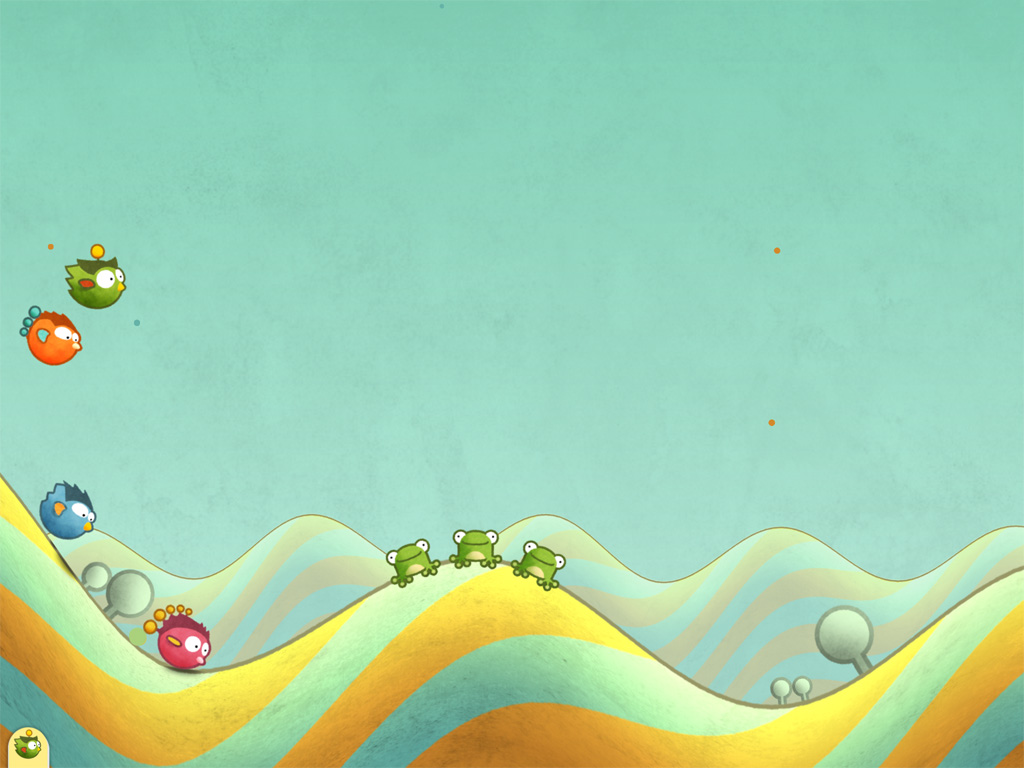
Tiny wings was created by a single developer named Andreas Illiger for the IPhone back in 2011. It is a simple game in which you play as a bird who has always dreamt of being able to fly, although due to his tiny wings is unable to fly and dreams of flying all the time. With the help of the hilly environment, he is able to make his dream a reality by using the hilly terrain to his advantage. Gathering up speed as you slide down the slope of the hill and then using the upslope as a launching ramp into the air and at times clouds. You have to continually time your dips into the slopes perfectly in order launch yourself to keen flying throughout.

Tiny wings has a brilliant overall aesthetic display and is highly regarded by several game reviewing websites for having a fantastic art style and simple yet addictive game mechanic (TouchArcade, IGN, Gamepro). Tiny wings particularly excels in its visual ability to stand out from the rest of the IOS crowd which is part of the reason it has reached over seven million downloads to date. It has a very simple one-touch mechanic which causes the character to nose dive and force its weight to drive the momentum on the hills. The art style is full of visual vibrancy in it’s procedural generated watercolour-esque background and soft cute characters. The music and gameplay, combined with vibrant art offer a credulous experience.      

Challenge 4/5: In review of how well Tiny Wings balances it’s aspects of challenge, it is clear that the general gameplay mechanic is a very simple one-touch function yet is adequately hard to master. As you begin the flight filled experience it is often hard to master the timing of when to stop touching the screen, as if you hold it for too long, it causes the momentum to wane. Often you can find yourself enjoying the vibrant and positive experience of the game as time swiftly passes by, a certain verification of being in the feeling of flow. Although despite the bliss of the simplicity of this unique mechanic, even after completing the two main modes of the game (day trip and flight school), it can be almost frustratingly difficult in defeating the AI within the game as even a few mistimed hill launches or set ups can slow you down significantly. Although the mechanic is very basic, it can present a means negative attachment if the learning curve is not concurred, although despite this, the challenging aspect of the game is undoubtedly vigorous and enrapturing.  

Freedom 2/5: The freedom in the game is fairly limited within the constraints of the set storyline and set purpose. The game is two dimensional with the bird being only capable of either nose diving or gliding through the air on default. The game only has two game modes, one in which you compete to achieve an array of goals such as hill ride 3 times consecutively, although the game generally lacks flexibility. Despite only being capable of affecting the bird’s ability to force its weight downwards, the choice of timing of when this is down is crucial in impacting your success within the game.

Retention 4/5: The replay value of Tiny Wings is praised as being ‘endlessly replayable’ due to its balance of great art and immersive experience as well as the addictive one touch mechanic which is hard to master (Touch Arcade). The game has quite an addictive one-touch mechanic that is so basic and inviting for even the less experienced game enthusiasts. The depth of the game is also sufficient to keep the users interest with four different characters in three different worlds consisting of five different levels and each level is different. The only gripe within the playability factor of the game is within the difficulty of the game as it can be really hard to predict when the next hill is coming in order to slide down and launch from it, which may lose the users interest after being frustrated with the level of difficulty as you progress. Overall, the levels of retention within the game are abundant and easy to submerge oneself and be absorbed within the experience.


Immersion 4/5: The immersive aspects of Tiny Wings play a huge role within the game’s visualised submission. The soft art style and subtle animations create a real sense of calm euphoric sensation of being in a harmless and safe place. The compassionate story of the small adorable bird who dreams of flying really bonds with the users. The fantasy of a positive and serene environment is created by the unique art style and the calming music as the game really immerses you into a new reality. The visuals are vibrant, with subtle animations of leaves and particles floating in the background. The immersive qualities of this game are evidently strong although the effect can seem to wear off after the scenery doesn’t significantly alter as you progress through the game. This is obviously not the intended purpose of the game although does limit the freshness of the illusion. Overall, the game establishes a very strong emotional connection with the imagery, that of calmness and positivity.


Value 4/5: The value that Tiny Wings gives you is somewhat humble although quite substantial in its subtle form. One of the simple rewarding visuals of the game are when you do three hill jumps in a row, you are given a starry sparkling boost which takes you high into the clouds, which is a bonus for those who are playing the game successfully. The main tangible reward that is given to the user is the reward of a fish for the first, second and third place birds, and if you fail the level and become fourth you are given a lesser reward of a shrimp as an alternative. This creates a sense of accomplishment when you continue to progress throughout the game. On top of the tangible fish reward, you are also presented with a new next after completing each world. In terms of the intangible, the feeling of value is consistent with the calming and dreamlike experience as you are immersed within play and there is a sense of satisfaction from every subtle animation to every new world. Although the feeling of completing the set of worlds leaves you somewhat unfulfilled as there is no ending sequence and playing with the other characters feels very similar to the first, despite this, the game successfully creates value for the player.  


Feel 5/5: The feel is arguably the most pinnacle aspect of the game and one of the core reasons for its success. The simple and approachable one-touch mechanic in combination with the visual feedback is so fitting and balanced that it certainly brings the interaction to life. The feel is separated from many other mediocre experiences by its overall polish and its own unique feel, an example of this are the frogs within the game who all croak a unique sound to begin the race. There is a certain amount of visual harmony within the game, notably; the characters are all of a rounded gentle disposition which linked perfectly with the curvy hills and creates a harmonious sensation. The game plays incredibly well and the simple, warm, positive, calm aspects all interrelate to create a pleasurable user experience.        


RATING
CHALLENGE
4
FREEDOM
2
RETENTION
4
IMMERSION
4
VALUE
4
FEEL
5
TOTAL (Mean)
3.8


Table of results for Tiny Wings

In deduction of Tiny Wings and its overall game aesthetic ability, it is evident that as with the originally intention of choosing it for its visual significance, it is evident from looking at the data chart that the visual aspects of feel, value and immersion are certainly a strong driving factor in the games aesthetic success. It is also apparent that overall it is a fairly well balanced in offering a valid experience as the sense of challenge and retention are also well regarded. The freedom of the game is not as well stipulated within this game, but certainly do not take away from its overall aesthetic experience.